According to the Law School Admission Council (LSAC), more than 60,000 students apply to law schools each year in the United States alone. But before they even apply, most students start with one search: the best law school in the world, and is it worth it?
You might be assuming simple answers with names like Harvard, Oxford, and Yale. But do they actually align with your goals, finances, and future goals? This guide breaks down the best law schools, along with real admissions statistics, tuition figures, and career outcomes data.
What are the best law schools in the world in 2026?
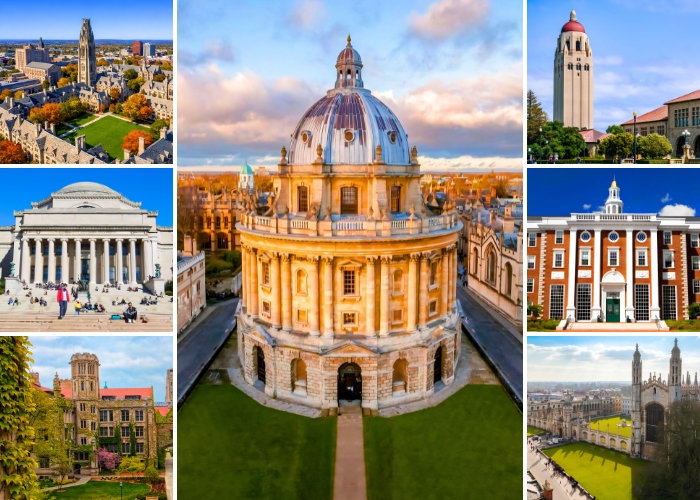
Thinking about which is the No.1 law school in the world? Which country is best for law college? Global law school rankings such as QS and Times Higher Education provide insights into the world's top law schools. Here are the top colleges in the world you can consider:
|
School |
Country |
Acceptance Rate |
Annual Tuition |
Degree Offered |
|
Harvard Law School |
USA |
~8% |
~$70,800 |
JD, LLM, SJD |
|
Yale Law School |
USA |
~6% |
~$72,500 |
JD, LLM, JSD |
|
Stanford Law School |
USA |
~9% |
~$71,000 |
JD, LLM, JSD |
|
Columbia Law School |
USA |
~17% |
~$74,000 |
JD, LLM, JSD |
|
Univ. of Chicago Law |
USA |
~17% |
~$72,000 |
JD, LLM, JSD |
|
Oxford university |
UK |
~12% |
~£29,700 |
BA Law, BCL, MJur, DPhil |
|
Cambridge (Faculty of Law) |
UK |
~15% |
~£28,500 |
BA Law, LLM, PhD |
Yale University
Yale holds the #1 spot in US News rankings for a reason: it is the most intellectually intense, smallest, and arguably most prestigious law school in the world.
Yale has no grades in the traditional sense. The school uses Honours / Pass / Low Pass / Fail, which deliberately removes the cutthroat GPA competition you see elsewhere. This is a deliberate philosophical choice: Yale wants lawyers who think deeply, not just strategically. An extraordinary percentage of former Yale graduates have gone on to clerk for Supreme Court justices, and the school has produced more federal judges and cabinet-level officials per capita than any other law school. If you want to shape law at the highest level, not just practice it, Yale is the place.
Location: New Haven, Connecticut, U.S.A.
Acceptance rate: 9-10%
Average tuition fees: $55,000 - $60,000
Harvard University
Harvard University is the oldest and largest law school in the United States. With over 2,000 students, it has the most extensive law library in the world. But what really makes Harvard special isn't just the name, but it's the sheer density of opportunity.
The JD curriculum is rigorous but flexible. In your first year, you study the foundations: civil procedure, contracts, torts, criminal law, constitutional law, and legal research and writing. After that, you have enormous freedom to specialise. Harvard Law School offers various programs, including JD, LLM, and SJD degrees.
What's great about Harvard:
- Unmatched alumni network globally
- 50+ clinical and experiential programs
- Enormous scholarship endowment
- Strongest Big Law recruitment pipeline
Stanford University
Stanford Law is where Silicon Valley meets legal education, and that intersection is unlike anything else in the world. Sitting in the heart of the Bay Area, Stanford has leaned hard into technology law, entrepreneurship, and interdisciplinary thinking, and it shows in the curriculum, the faculty, and the type of graduates the school produces.
Like Yale, Stanford has a small JD class (around 180 students) and uses an Honours / Pass / Restricted Credit / No Credit system that keeps the atmosphere collaborative rather than competitive. If you want to go into tech law, venture capital, startup advisory, or policy at major platforms like Google or Meta, Stanford is simply the best-positioned school on the planet.
Columbia Law School
If you want to work in Big Law, finance, or international corporate practice, Columbia is your school. Located in Manhattan, it sits in the middle of the largest concentration of major law firms on Earth. Sullivan & Cromwell, Davis Polk, Cleary Gottlieb, Wachtell Lipton; these firms don't just recruit at Columbia, they are staffed with Columbia graduates at the partner level.
The school also runs one of the most active global programs, with partnerships and exchange programs across Asia, Europe, and Latin America.
The alumni network in New York City is unmatched, and in law, geography matters. Being in New York for three years means constant exposure to practitioners, judges, and policymakers through guest lectures, clinics, and networking events that just don't happen anywhere else.
University of Chicago
University of Chicago Law is the intellectual's law school. Famous for the "law and economics" movement, which transformed how courts think about antitrust, regulation, and corporate law, UChicago trains lawyers to think like economists and social scientists, not just litigators.
The school has produced more federal judges per capita than any other US law school, and its judicial clerkship placement rate rivals Yale. If you want to clerk for a federal circuit court or the Supreme Court and then go into academia or government, UChicago is one of the very best platforms.
University of Oxford
Oxford's approach to legal education is fundamentally different from that of American law schools. The BA in Jurisprudence (the undergraduate law degree) is a three-year immersive program that emphasises legal philosophy, public law, jurisprudence, and comparative law alongside practical legal subjects.
Oxford law graduates are among the most articulate, rigorous legal minds in the world.
The BCL (Bachelor of Civil Law), despite its name, is a graduate-level degree and is considered one of the most prestigious postgraduate law qualifications globally. International students who already hold a law degree come from everywhere to do the BCL, and it's a genuine academic honour to be admitted. Want to know more about the University of Oxford? Read this.
University of Cambridge
Cambridge Law has a particular strength in commercial and private law, company law, contract, trusts, equity, and banking law. These firms don't just recruit at Cambridge, they built their recruitment systems around it.
Like Oxford, Cambridge uses a supervision system that demands weekly independent essay writing and one-on-one defence of your ideas. The Cambridge LLM is a highly regarded postgraduate option, and the Faculty has some of the leading commercial law scholars in the world.
Cambridge graduates are particularly dominant in UK courts, the government legal service, and international commercial arbitration. If your goal is to become a barrister, solicitor at a Magic Circle firm, or an international arbitration specialist, Cambridge is one of the best options.
What to Consider When Choosing the Right Law School for You
Here's a framework to actually make this decision well.
Your specialty area
Tech law? Go Stanford. Big Law corporate? Columbia or Harvard. Public interest? Yale. International institutions? LSE or Oxford. Match your ambition to the school's strength.
Where do you want to practice
Geography matters in law. A UK degree opens UK doors. A Singapore degree opens Asian doors. Don't study in one country and expect automatic recognition in another.
Financial reality
A full scholarship to a top-25 school beats $250,000 in debt at a top-5 school if you're going into public interest or government work. Do the debt math honestly before deciding.
Employment outcomes
Look at where graduates actually work, not just the school's stated employment rate. Some schools count part-time or non-legal employment to inflate their stats.
Alumni network access
Are alumni at the firms, chambers, courts, or institutions you want to be at? A school with 500 alumni at your target firm is worth more than a higher-ranked school with none there.
Common Admission Requirements
See what every application actually needs, depending on where you're applying:
LSAT score
The Law School Admission Test determines more about your application than almost anything else. Harvard and Yale's median is 174. A 170 gets you into strong T14 programs. Below 165 makes top-10 admissions extremely unlikely. Prepare for at least 4-6 months.
Undergraduate GPA
Top schools want a GPA of 3.7+ (3.9+ is ideal for HYS). A lower GPA can sometimes be offset by a stellar LSAT, strong work experience, or a compelling explanation in an addendum.
Personal statement
This is the most underestimated part of the application. Write about a specific moment, case, injustice, or experience that made you want to be a lawyer. Be precise. Be honest. Tell a story. Admissions committees read thousands of personal statements; make yours the one they remember.
Letters of recommendation
2 to 3 letters of recommendation are essential to apply to any university. At least one must be from a professor who can speak directly to your analytical ability and intellectual potential. A glowing letter of recommendation from someone who vaguely knows you is far less valuable than a specific, detailed letter from a professor who has graded your work and seen you think
Resume and work experience
Resume and work experience are the soul of your application. Legal internships, research assistantships, policy work, advocacy, NGO work, journalism, or anything that shows your social awareness makes your application stand out. Many top applicants now take a 1 to 2-year gap before law school to strengthen their profiles.
Final words
A Yale or Harvard degree opens doors. That's just true. But lawyers who are intellectually curious, who genuinely care about their work, who show up with integrity, they rise at any institution. The best law school is the one where you can actually succeed academically and professionally.
Do your research. Be honest with yourself about what you need. And then apply with absolutely everything you have. If you feel stuck or are wondering where to start, CounsellingX has your back. Our expert counsellors can handle everything from university selection according to your profile to completing your documentation. Trust professionals and book a free consultation today.
FAQs
Which is the best law school in the world in 2026?
According to the QS World University Rankings by Subject 2026, Harvard University holds the top position globally. Yale Law School holds the #1 spot in the US News rankings, reflecting its unmatched clerkship rate, selectivity, and academic influence.
Harvard vs. Yale Law School: Which is better?
Both are exceptional, and the honest answer is that it depends on your goals. Yale is smaller, more intimate, and produces more Supreme Court clerks and legal academics per capita. Harvard is larger, offers more programme diversity, and has a broader industry footprint. Yale's prestige is unmatched. For sheer network breadth, Harvard's size creates unrivalled reach.
What LSAT score is required for top law schools?
There are no published minimum LSAT cutoffs. Competitive applicants at the top five US law schools typically score between 171 and 176, with medians sitting at 173 or 174. Below 170, the path to the very top schools becomes significantly more difficult, though exceptional personal statements, work experience, and institutional diversity considerations can and do make a difference.
Can international students get into Stanford Law School?
Yes. All top US law schools actively welcome international applicants. Stanford, Harvard, Yale, and Columbia each maintain internationally diverse student bodies. International applicants must submit LSAT or GRE scores, demonstrate English proficiency, and meet the same holistic admissions standards as domestic applicants.
Which law school produces the most judges?
Yale Law School leads in producing US federal judges and Supreme Court clerks on a per-capita basis. Harvard, due to its larger class size, produces more judges in absolute numbers. For the UK judiciary, Oxford and Cambridge remain the primary pipelines to the English Bar and senior judiciary.