Introduction
The hardest part about studying abroad isn’t getting accepted.
It’s figuring out how you’re going to pay for it.
Almost every international student asks this exact question, and almost every one of them finds a way to make it work. Studying abroad isn't just for students who come from wealthy families; it's also for students who plan smart and know where to look for help. There are so many financial options and resources available to help lighten the load of your expenses.

Let's look at some of the best sources of funding support that remain unclaimed every year, and how they can help remove financial stress to study abroad.
Merit-Based Scholarships, Grants, and Bursaries: Which One Is for You?
You can study abroad for FREE. Yes, you read that right. Here we will be exploring options to study without paying a single penny, if you qualify. And even if you don't, this blog will tell you how you can cut down the cost.
There are some scholarships, grants, and bursaries that can support study expenses. Many students are confused between these terms and what they actually cover. Here is the simple breakdown of each one.
Merit-Based Scholarships
Based on your grades, some universities and even governments offer several scholarships. These scholarships can cover anything from a small portion of your fees to the entire cost of your degree.
Scholarships awarded by Universities
These scholarships are highly competitive. If you want to target it, keep in mind that you need strong academic scores, solid extracurriculars, and usually proof of English proficiency (like IELTS/TOEFL, or MOI). Here are some universities that offer fully-funded scholarships:
- University of Cambridge
- University of Oxford
- Princeton University
- Harvard University
- Stanford University
- Yale University
- ETH Zurich (Switzerland)
- Khalifa University (UAE)
- King Abdulaziz University (Saudi Arabia)
- Hamad Bin Khalifa University (Qatar)
Not every university offers fully funded opportunities, but some do. And knowing which ones actually cover your full cost can completely change your study abroad plan.
Scholarships awarded by the Government:
Government-funded scholarships are fully or mostly funded programs offered to international students based on merit, potential, or specific criteria. Here are some of the popular scholarships offered by the government:
- Erasmus Mundus Scholarships (Europe): Erasmus Mundus is funded by 27 Governments in the EU. This scholarship lets you study in multiple countries during your degree, with your major expenses covered.
- Eiffel Excellence Scholarships (France): Funded by the French government, it supports international students aiming for master’s or PhD programs at top institutions, with generous financial support.
- Government of Ireland International Education Scholarships (Ireland): It offers high-achieving international students the opportunity to study in Ireland for 1 year, along with a €10,000 stipend to cover living expenses.
- Fulbright U.S. Student Program: This scholarship basically covers your main expenses like living costs, health insurance, and tuition fees while you’re studying.
- DAAD Research Grants: This scholarship funds your studies or research, covering your living costs, travel, and more. It’s a German government-funded scholarship and is competitive to get.
Grants
Usually given based on your specific circumstances, such as financial need, disability, or being a carer. Governments, charities, and trusts commonly offer these.
Here are some great grant opportunities that you can take advantage of:
- Philanthropic Education Organisation for Continuing Education Grant
- UNESCO
- Commonwealth grant
- Stipendium Hungaricum
- The Deutsche Forschungsgemeinschaft (DFG grant)
Bursaries
Offered directly by universities to students from lower-income backgrounds, often as a one-time payment to help with living costs rather than just tuition fees.
How do you actually find these?
- Check your university's official scholarships page
- Search government-run scholarship databases for your destination country
- Look at foundations and trusts related to your field of study
- Ask your study counsellor. This is literally what CounsellingX do, and our expert counsellors know about opportunities students miss on their own
Can I Get a Student Loan as an International Sudent?
This is probably the most-searched question on every study abroad forum, and the answer is usually a yes. So, let’s explore what loan options are available for you:
1. Loans from private banks
In many countries, private banks offer education loans specifically for students who want to study abroad. Interest rates usually range between 9% to 13% per year, depending on the bank and country.
2. Loans from public or government banks
Public banks offer slightly lower interest rates (8% to 10%), but they usually require collateral once your loan crosses a certain amount.
If you or your family have property that can be used as collateral, this option is great, as the interest rate is low and is more secure.
3. Loans through your university
A few universities offer their own financial aid or loan programs to attract international talent.
What documents will I need to apply for a loan?
Here are some necessary documents you'll be asked for:
- Proof of residence
- Academic records and your university acceptance letter
- Bank statements (usually the last 6 months)
- Collateral documents, if applicable
- Passport and ID proof
Loans are a big financial commitment, so talk to someone who understands your specific situation before signing anything. For better guidance related to financial aid for you, consult with CX professional counsellors.
Work-Study Programs: Can I Work While Studying Abroad?
Short answer: Yes, in most countries. Work-study programs allow international students to work part-time while studying. It's a great way to:
- Earn some extra spending money
- Gain real work experience for your CV
- Build a local network before you graduate
Universities often have on-campus jobs like being a library assistant, research helper, or student ambassador. But keep in mind that you will still need to prove you already have enough funds to cover at least your first year of tuition and living costs.
Sponsorships: Who Actually Sponsors to Study Abroad?
Sponsorships are less talked about, but they're a real and often overlooked option. A sponsorship simply means someone else, like a company, government body, NGO, or even an individual, agrees to fund your education. It depends on the sponsor how much money they will contribute, but usually they cover all of your university expenses.
If you go with this option, make sure everything is documented clearly in writing: how much is being covered, for how long, and what's expected of you in return (like a minimum GPA or a work commitment after graduation).
Other Smart Ways to Cut Down Study Abroad Costs
Here are some more ways to cover your study abroad expenses:
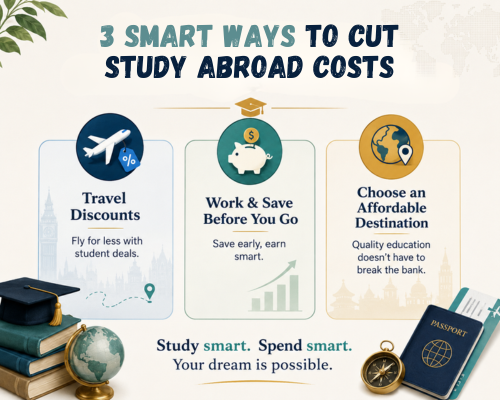
- Travel discounts: Many universities partner with airlines to offer discounted tickets for international students. Always check with your university's international office before booking flights.
- Part-time work and savings before you leave: Starting to save even a year in advance, cutting unnecessary expenses, and picking up freelance or part-time work at home can help set aside a portion of your earnings before you go.
- Choosing an affordable destination: Sometimes the smartest financial move is picking a country or university with lower tuition in the first place, without compromising on the quality of education.
Which Funding Option Is Right for You?
There is no single best way to fund your studies abroad. The right choice depends on a few factors, like:
- Your destination
- Your course and university
- Your family's financial situation (for the loan option)
- Your timeline
In reality, most students don't rely on just one option. A combination like a partial scholarship covering part of the tuition, a loan covering the rest, and a part-time job handling day-to-day living costs.
Still confused about which options you qualify for and how to apply for them correctly, you can rely on our professionals. Our expert counsellors in the very first session understand your budget and background, and help you shortlist universities, scholarships, and loan options that genuinely fit your situation.
FAQs
Can international students get a student loan without collateral?
Yes, in many cases. Some banks offer smaller loan amounts without collateral, though interest rates are higher. Once the loan amount crosses a certain limit, most banks will ask for collateral or a strong co-signer.
Do I need a co-signer to get an education loan?
Usually, yes. Most banks require a co-signer or co-applicant with a stable income and good credit history, typically a parent or close family member.
Can I fund my entire degree through scholarships alone?
It's possible, but not common. Full-ride scholarships exist, but they're highly competitive. Most students use scholarships to cover part of their costs and combine them with a loan, savings, or part-time work for the rest.
How many hours can international students work while studying?
This varies by country, but most destinations allow around 20 hours per week during term time and full-time hours during holidays. Always check your specific visa conditions, since working beyond your allowed limit can affect your visa status.
When should I start applying for scholarships?
As early as possible, ideally 6 to 12 months before your intake. Many scholarship deadlines fall well before university application deadlines, so starting early gives you the best shot.
Is it better to take a loan or wait and save up money first?
It depends on your timeline and goals. Saving up avoids debt but can delay your plans by years. A loan lets you start sooner but comes with repayment responsibility after graduation. Our counsellor can help you weigh this based on your specific situation.
Can my counsellor help me apply for loans and scholarships?
Yes. Our counsellors don't just help you pick a university, but we also guide you through funding options, help you understand what you qualify for, and support you through the application process for loans and scholarships.