Key Takeaways
Navigating the world of MBA programs can be confusing, especially when every university promises the “best experience”. If you’ve been searching for answers on how to choose the right program, meet admission requirements, secure scholarships, and plan your career, this guide is your one-stop solution. This guide will show you how to pursue an MBA in New Zealand. You’ll learn how to make smart choices and open doors to global opportunities.
Introduction
What if one decision could transform your career, expand your global network, and open doors you never imagined? For many ambitious professionals, the dream isn't just about getting a degree; it's about where that journey takes them.
While the US and UK often dominate the headlines in business education, New Zealand has quietly emerged as a powerhouse for future business leaders seeking more than just a classroom experience.
Pursuing an MBA in New Zealand offers a unique blend of rigorous academic standards, a lifestyle that breeds creativity, and a business environment that values sustainability and innovation. If you are looking to elevate your career while living in one of the world's most beautiful countries, keep reading.
Top Reasons to Consider an MBA in New Zealand
Choosing where to study is as critical as choosing what to study. New Zealand offers distinct advantages that set it apart from other study destinations.
- Globally Ranked Universities: Several NZ universities rank in the world’s top 300 for business and management education.
- Multicultural Exposure: MBA classrooms feature professionals from 30+ countries, providing global perspectives and building a powerful international network.
- Career-Oriented Curriculum: Strong emphasis on leadership development, strategic thinking, and applied industry projects ensures you graduate with real-world business acumen.
- Budget-Friendly Compared to Western Destinations: MBA tuition is generally more affordable than in the US, UK, or Australia, with excellent scholarships available.
- Generous Work & Immigration Policies: A post-study work visa allows MBA graduates to work in New Zealand for up to 3 years, supporting long-term career and migration prospects. Additionally, getting a study visa for New Zealand is generally straightforward and considered easier than in other countries.
- Welcoming Environment: New Zealand’s inclusive culture, stunning landscapes, and high safety standards make it one of the world’s best places to study and live.
Types of MBA Programs in New Zealand
New Zealand's universities offer a variety of MBA formats to suit different career stages, lifestyles, and professional goals. Understanding the differences between these programs will help you choose the one that best aligns with your needs.
Full-Time MBA
The Full-Time MBA is the traditional, immersive business school experience. It is designed for individuals who are ready to step away from their careers to focus entirely on their studies.
- How Long the Program Takes: Typically 12 to 24 months.
- Best Suited For: Early to mid-career professionals looking to make a significant career pivot, accelerate their career trajectory, or move into a new industry or country.
Part-Time MBA
The Part-Time MBA is designed for working professionals who want to earn their degree without putting their careers on hold.
- Expected Time to Complete: Usually 2 to 4 years.
- Perfect For Students Interested In: Professionals who wish to advance within their current company or industry and need the flexibility to continue working while they study.
Executive MBA (EMBA)
The Executive MBA is tailored for senior managers, executives, and business owners with substantial leadership experience.
- Length of Study: Generally 18 to 24 months.
- Best for: Experienced leaders looking to refine their strategic thinking, broaden their executive skill set, and network with other senior professionals.
One-Year MBA
This is an accelerated program that condenses the core MBA curriculum into a shorter timeframe, offering a faster return on investment.
- Program Timeline: 12 months.
- Recommended For: Highly motivated individuals with clear career goals who want to minimise their time out of the workforce and re-enter the job market quickly with an advanced qualification.
Top- Ranked MBA Universities in New Zealand you can't miss
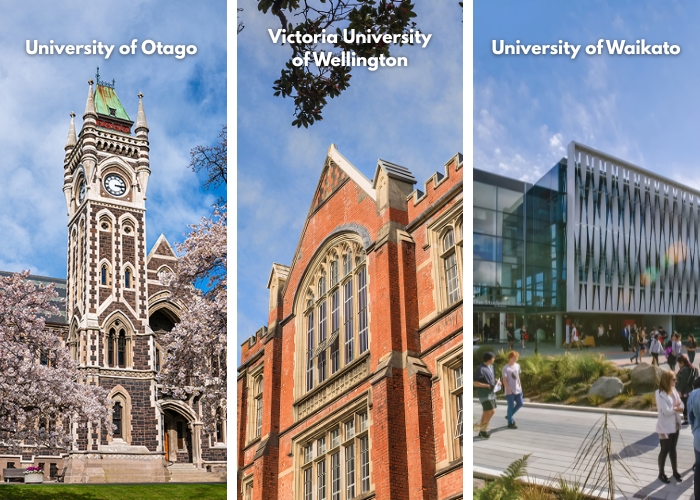
|
University |
Program type |
Tuition (NZD |
|
University of Otago |
Full-time MBA (15 Months) |
NZD 45,000–50,000 |
|
Victoria University of Wellington |
Executive MBA (Part-Time) |
NZD 44,000–47,000 |
|
University of Waikato |
MBA (Flexible/part-time) |
Approximately NZD 59,573 |
Admission Requirements for an MBA in New Zealand
Getting into a top MBA program in New Zealand requires preparation. While specific criteria vary by university, most institutions look for a mix of academic potential and professional maturity.
Academic Qualifications
Applicants must have a three-year bachelor's degree, equivalent to a New Zealand bachelor's degree.
Work Experience
Most universities require 3 to 5 years of professional work experience, preferably in a managerial or supervisory role.
English Proficiency
For international students, demonstrating proficiency in English is non-negotiable.
- IELTS: 6.5 (no band below 6.0)
- TOEFL iBT: 90
- PTE Academic: 58+
Additional Documents
- Updated CV/Resume
- Statement of Purpose (SOP)
- Two reference letters
- GMAT score (only required by select universities, such as the University of Auckland)
Scholarships and Financial Aid
While an MBA is a significant investment, financial support is available to help ease the burden.
- Rotary Foundation Global Grants: Offers around $30,000 for graduate-level coursework, focusing on community service and leadership.
- University Specific Scholarships: Institutions like the University of Otago and Victoria University of Wellington offer various scholarships for international students, ranging from $10,000 to $18,000 based on academic merit.
- Vice Chancellor’s Excellence Scholarships: Available at universities like Waikato, these are aimed at high-achieving international students and can offer up to $15,000.
Want to know more about scholarships in New Zealand? Read this: How You Can Get a Scholarship in New Zealand in 2026
Post-Study Opportunities and Salary
One of the biggest draws for international students is the post-study work pathway.
Post-Study Work Visa
Graduates of a Level 9 qualification (Master's degree) in New Zealand are often eligible for a Post-Study Work Visa, valid for up to three years. This visa allows you to work for any employer in almost any job, providing a crucial window to gain international experience or seek permanent residency.
Earning Potential
The return on investment for a Kiwi MBA is solid. The average salary for MBA graduates in New Zealand sits around $83,000 NZD, with potential for significant growth as you move into senior leadership roles.
Conclusion
An MBA in New Zealand offers more than a degree; it offers a new perspective. Whether you are drawn by the globally ranked universities, the emphasis on sustainable business, or the promise of a balanced lifestyle, this path can be transformative for your career. The combination of rigorous education and practical work rights makes it a strategic choice for ambitious professionals worldwide.
Navigating the application process, visa requirements, and university selection can feel overwhelming. Having the right guidance can turn a complex process into a smooth journey. CounsellingX can be incredibly helpful in this regard. We will connect you with expert counsellors who understand the nuances of international admissions and can help personalise your application for success. Trust us to simplify the process and help you achieve your MBA goals.
FAQs
How much does an MBA in New Zealand cost?
The cost of pursuing an MBA in New Zealand varies depending on the university and program type:
- Tuition Fees: NZ$30,000 – NZ$65,000 for full-time programs.
- Living Expenses: Approximately NZ$1,500 – NZ$2,500 per month, including accommodation, food, transport, and personal costs.
Can I apply for permanent residency after completing an MBA in New Zealand?
Completing an MBA alone doesn’t grant permanent residency, but post-study work visas allow graduates to gain work experience in New Zealand. This experience can contribute to skilled migration pathways for those seeking long-term opportunities in the country.
Can I pursue an MBA in New Zealand without work experience?
Some universities accept candidates without work experience if they have excellent academic records or leadership achievements. However, most programs prefer 2–5 years of professional experience, as it strengthens your application and enhances classroom discussions and group projects.
What are the visa requirements for studying an MBA in New Zealand?
To study in New Zealand, you must obtain a student visa, which requires:
- An offer of admission from a recognised university.
- Proof of sufficient funds to cover tuition and living expenses.
- Health insurance coverage for the duration of your stay.
- A valid passport and any required medical or police certificates.
Can I work while studying for my MBA in New Zealand?
Yes. International students on a valid student visa are generally allowed to work part-time for up to 20 hours per week during the academic semester and full-time during scheduled semester breaks and holidays. This is a great way to offset living costs and gain local work experience.
Is the GMAT mandatory for all New Zealand MBA programs?
No, it is not mandatory for every university. While the University of Otago typically requires a GMAT score (or their own admissions test), others like the University of Waikato may focus more on your management experience and previous academic performance. Always check the specific requirements of the school you are applying to.
What is the difference between an MBA and an Executive MBA (EMBA)?
The main difference lies in the target audience and schedule. A standard MBA is often for professionals with 3-5 years of experience looking to move into management. An EMBA is designed for senior professionals and executives with significant experience (often 5-10+ years) who want to sharpen their strategic skills without leaving their current senior roles.